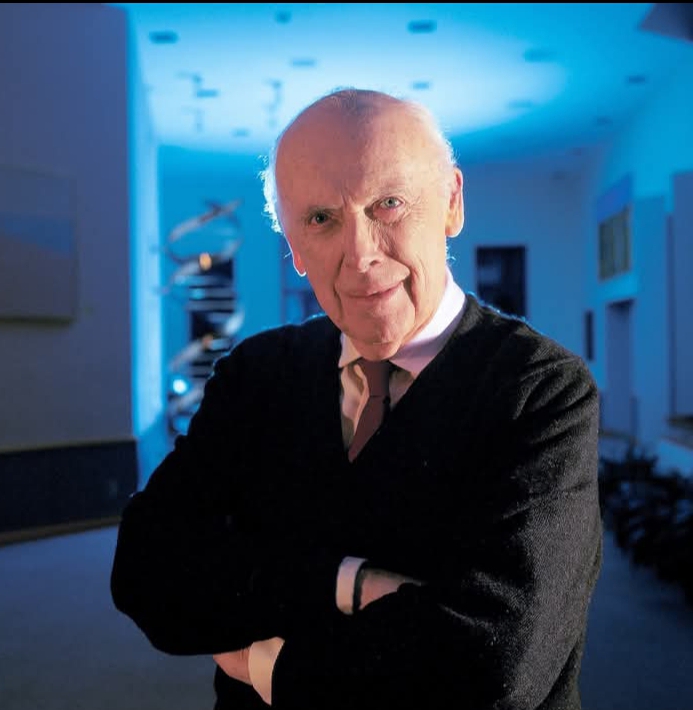
James Watson, the American molecular biologist who co‑discovered the double‑helix structure of DNA, died on 6 November 2025 at the age of 97.
His seminal 1953 paper with Francis Crick, based on X‑ray diffraction data from Rosalind Franklin and Maurice Wilkins, revealed the molecular architecture that underlies heredity and earned the three scientists the 1962 Nobel Prize in Physiology or Medicine an award that came 63 years before his death.
Watson’s model explained how genetic information is stored and replicated, laying the foundation for modern genetics, biotechnology, and the Human Genome Project.
Beyond the Nobel, Watson held influential positions, including director of Cold Spring Harbor Laboratory and a leadership role in the Human Genome Project, and he authored the celebrated memoir The Double Helix.
His later years were marred by controversial statements on race and intelligence, which led to the removal of several honorary titles and public censure, creating a complex legacy that juxtaposes scientific brilliance with personal controversy.
Watson’s death has prompted tributes that acknowledge his monumental contribution to biology while also reflecting on the broader implications of his public conduct.
The scientific community recognizes the double‑helix discovery as a breakthrough that transformed medicine and research, even as it continues to grapple with separating a scientist’s achievements from his personal views.