









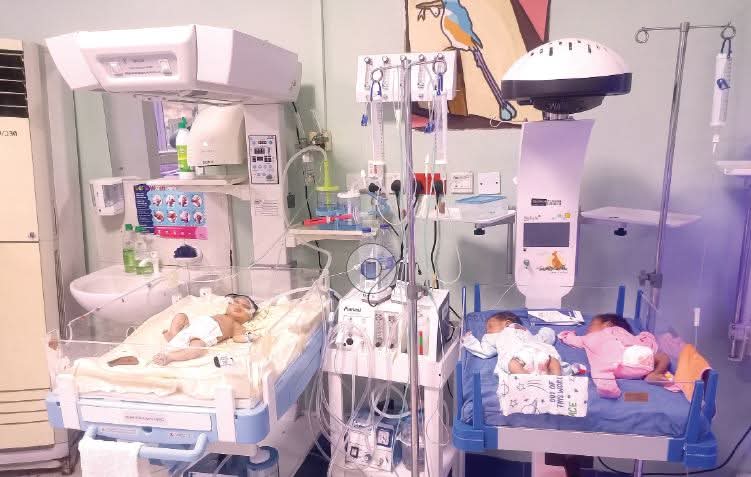
In a neonatal intensive care unit at the Maternal and Child Centre along Ogombo Road in Eti-Osa, Lagos, premature infants have historically faced severe risks due to inconsistent electrical supply.
Frequent power outages, often lasting for hours or even days, disrupted critical equipment such as incubators, continuous positive airway pressure machines, phototherapy units, and vital sign monitors.
These interruptions led to incidents including infant fatalities when life-support systems failed and cases of life-threatening hypothermia in vulnerable newborns who lack sufficient body fat to regulate temperature independently.A dedicated solar energy initiative has since addressed this challenge.
In March 2026, a group of 18 senior executives from the Lagos Business School’s Senior Management Programme installed a robust system comprising 28 high-capacity solar panels, inverters, and lithium-ion battery storage.
This setup delivers reliable, round-the-clock electricity tailored to the unit’s sensitive medical devices, significantly reducing dependence on costly diesel generators and mitigating the disruptions previously caused by grid instability and infrastructure damage.
The implementation has yielded substantial improvements in patient outcomes and operational efficiency.
With uninterrupted power now available, healthcare professionals can maintain consistent care without the constant threat of equipment failure, thereby lowering risks of complications such as respiratory distress and severe jaundice.
Hospital staff report greater focus on clinical duties, reduced financial strain from fuel expenses, and enhanced prospects for the survival of preterm and low-birth-weight infants. This project exemplifies a practical, sustainable solution that strengthens essential healthcare services in regions affected by energy unreliability.
