









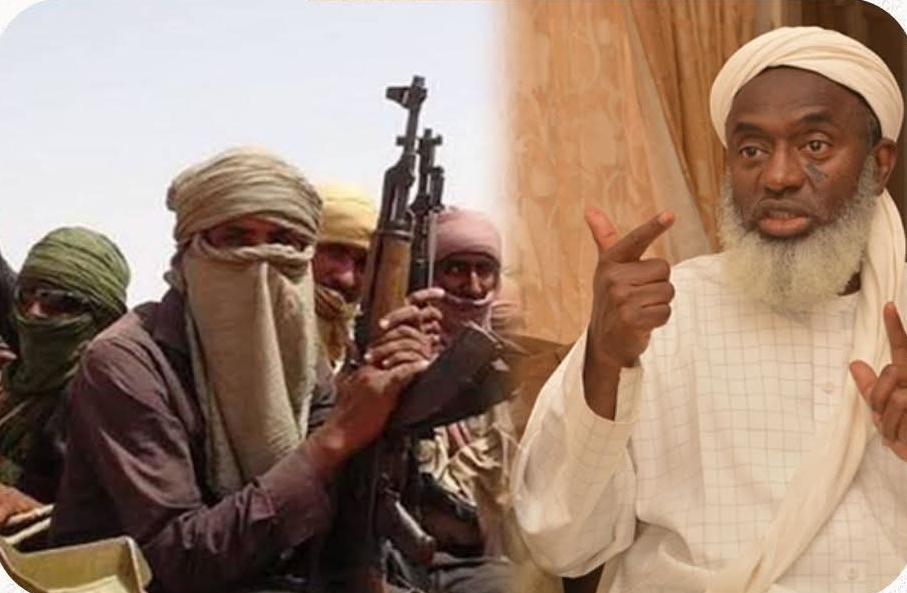
Sheikh Ahmad Gumi, a prominent Islamic cleric known for his mediation efforts in Nigeria’s volatile north‑central zone, recently offered a nuanced assessment of the current security landscape. He observed that the bandit groups, which have been responsible for widespread kidnappings and violent raids, are presently driven by a desire for retribution following recent military operations against them.
Despite their brutal methods, Gumi noted that these militants have demonstrated a capacity to engage in dialogue when approached, indicating a pragmatic side that could be leveraged for peace.The cleric’s remarks came amid heightened tensions, as the government has intensified its crackdown on criminal networks that have long plagued the region.
Gumi pointed out that, while the bandits’ actions remain unlawful and condemnable, their apparent openness to negotiation contrasts sharply with the stance of other non‑state actors. He cautioned that ignoring this willingness could undermine potential avenues for de‑escalation.
In drawing a comparison, Sheikh Gumi referenced the Indigenous People of Biafra (IPOB), a separatist movement that advocates for the secession of southeastern Nigeria.
He argued that IPOB’s objective to dissolve Nigeria’s federal structure leaves little room for compromise, as the group rejects any dialogue that does not guarantee full independence. Gumi’s critique underscores a broader concern that secessionist demands, when pursued without engagement, can exacerbate national fragmentation.
The cleric’s analysis has ignited a flurry of reactions on social media, where users have debated the merits of negotiating with bandits versus maintaining a hardline stance against separatist groups. Some commentators warn that engaging with criminals may set a dangerous precedent, while others argue that pragmatic dialogue can save lives and foster stability. Meanwhile, supporters of IPOB have defended the movement’s right to self‑determination, accusing the government of marginalization.
Gumi’s intervention also highlights the complex role of religious leaders in Nigeria’s conflict resolution architecture. By positioning himself as a mediator, he joins a tradition of clerics who leverage moral authority to bridge divides between the state and armed groups.
Observers note that his statements could influence public opinion and shape future policy discussions on how best to address both banditry and separatist agitation.
The full account of Sheikh Gumi’s comments, along with the ensuing debate, is available in the comments section beneath the original post, where a diverse array of perspectives continues to unfold. Readers are encouraged to explore the thread for a deeper understanding of the multifaceted security challenges facing Nigeria today.
