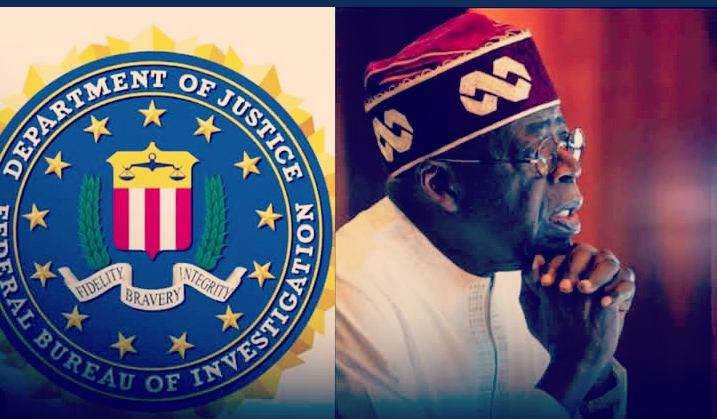
The US Federal Bureau of Investigation has cautioned that making public certain documents linked to President Bola Tinubu could put its operatives and sources at risk.
In a court submission tied to a Freedom of Information Act suit, the FBI told the US District Court for the District of Columbia that disclosure may expose individuals who took part in past investigations to possible retaliation. The bureau argued that revealing names and other identifying details could create safety concerns for those involved.
The case was brought by American transparency advocate Aaron Greenspan, who filed FOIA requests seeking records on allegations that Tinubu was linked to narcotics activity in the United States during the 1980s and 1990s. Similar requests were also sent to the CIA, DEA, IRS, and immigration authorities.
To justify withholding parts of the files, the FBI invoked FOIA Exemption 7(F) and other privacy provisions. It stated that some people named in the documents could see the information as damaging, while informants and agents who assisted in investigations might face threats or violence if their identities became public.
US District Judge Beryl Howell had earlier directed the FBI to explain why the materials should remain sealed and permitted the agency to submit its arguments privately for review. The development also revives attention to a 1993 US civil forfeiture matter in which $460,000 linked to Tinubu was surrendered to the American government.
FBI Warns Release of Tinubu-Related Records Could Endanger Agents and Informants