









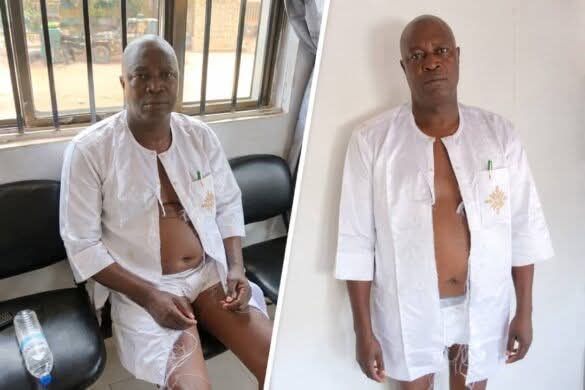
In a troubling development within Ondo State’s local administration, Mr. Tope Omolayo, Chairman of the Owo Local Government Area, was reportedly subjected to a physical assault and public humiliation upon his return to office.
Following a six-month suspension imposed by the council’s legislative arm, Omolayo attempted to resume his duties on Monday, only to encounter a group of suspected youths who allegedly beat him and stripped him of his clothing at the council secretariat.
This incident appears to stem from unresolved tensions with elected councillors, underscoring the fragile nature of interpersonal and institutional relationships in grassroots governance.
Such events reflect deeper systemic issues in Nigeria’s local government framework, where suspensions, allegations of misconduct, and retaliatory actions often disrupt service delivery to citizens.
Prior to the suspension, Omolayo had faced criticism, including accusations related to his conduct toward traditional institutions and administrative practices.
The involvement of security agencies, with reports indicating police intervention and a subsequent manhunt for the perpetrators, emphasizes the critical role of law enforcement in restoring order.
However, it also raises questions about the effectiveness of conflict resolution mechanisms within democratic structures at the local level, where political rivalries can escalate into violence rather than being addressed through dialogue or legal channels.
This occurrence serves as a reminder of the broader imperative for strengthening institutional safeguards, promoting accountability, and fostering a culture of respect for due process in public office.
Educative lessons emerge on the importance of transparent leadership, adherence to ethical standards, and the need for robust mediation processes to prevent political disputes from undermining community development.
As investigations proceed, stakeholders—including government officials, traditional rulers, and civil society—must collaborate to reinforce democratic norms, ensuring that local governance prioritizes public welfare over personal or factional interests.
Ultimately, incidents of this nature erode public trust and highlight the ongoing necessity for reforms aimed at enhancing stability and professionalism in Nigeria’s sub-national administrations.
