









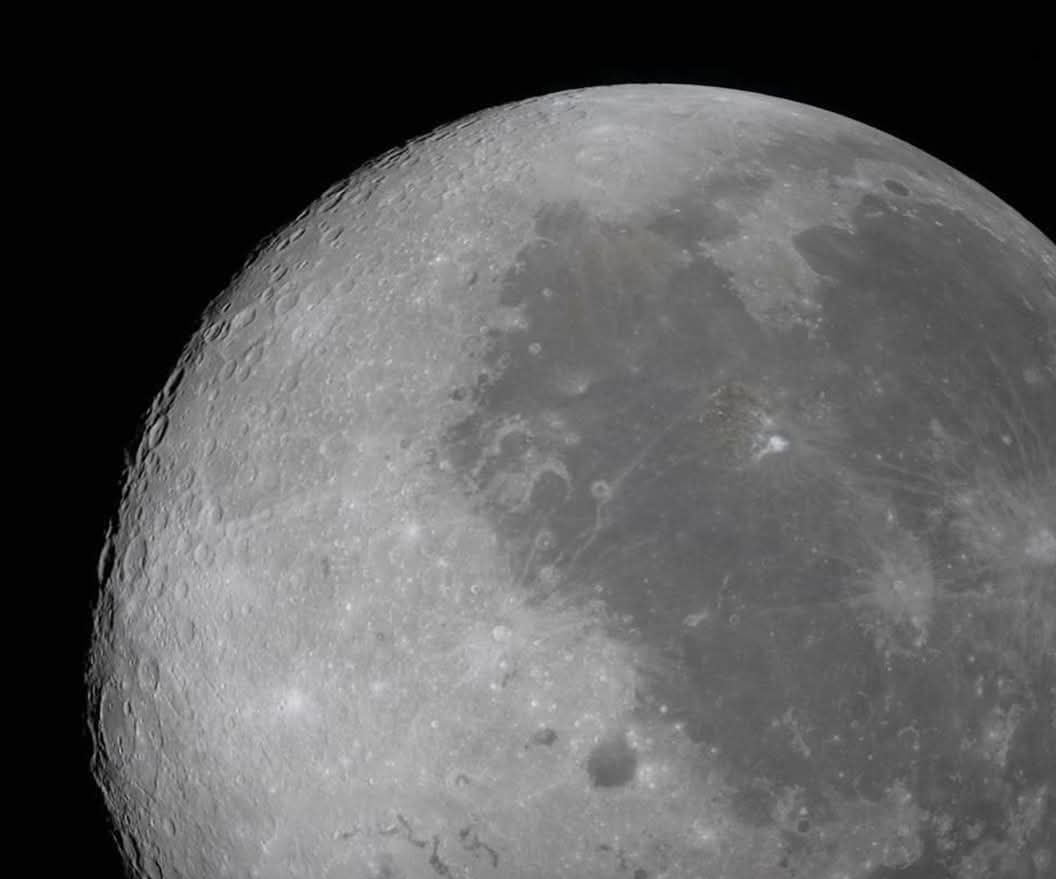
The crew of NASA’s Artemis II mission has initiated a approximately seven-hour lunar flyby, during which they are conducting detailed observations of the Moon’s surface from the Orion spacecraft.
This phase of the mission allows the astronauts to examine both the near and far sides of the Moon, including specific areas that have never before been viewed directly by human eyes. The unique trajectory of the spacecraft provides an unprecedented opportunity for visual and photographic documentation of lunar features.
At its closest approach, the Orion capsule passed approximately 4,067 miles above the lunar surface, enabling the crew to study prominent formations such as the Orientale Basin and other impact craters. During the flyby, the astronauts temporarily lost communication with mission control as they passed behind the far side of the Moon.
They are expected to capture images and provide live descriptions of terrain that previous missions, including those of the Apollo era, did not encounter under similar lighting conditions.This milestone represents a significant step in NASA’s Artemis programme, marking the first crewed journey beyond low Earth orbit in over five decades.
The mission not only breaks the record for the farthest distance humans have travelled from Earth but also gathers valuable data that will inform future lunar exploration and potential crewed landings. Live updates on the crew’s activities and observations continue to be available through official NASA channels.
