









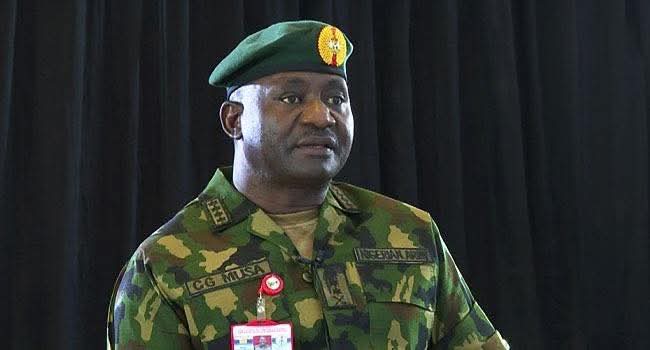
General Christopher Musa was sworn in as Nigeria’s new Minister of Defence in early December 2025, marking one of the most dramatic comebacks in recent Nigerian military history. Less than two months earlier, in October 2025, he had been removed as Chief of Defence Staff in a sweeping purge of the service chiefs.
His reappointment by President Bola Tinubu therefore stunned observers and sent a clear message: competence and battlefield experience still matter more than political fallout when the country is under siege.
At 58, Musa is a career infantry officer who has spent much of the last fifteen years fighting insurgency in the north-east. He commanded troops during some of the toughest phases of the campaign against Boko Haram and later against the Islamic State’s West Africa Province (ISWAP).
Soldiers who served under him describe a calm, methodical leader who prefers to visit forward operating bases himself rather than issue orders from Abuja. That hands-on reputation is precisely why many in the military welcomed the news of his return.
The circumstances that led to his earlier dismissal remain murky. Official statements spoke only of “reorganisation,” but leaks suggested the presidency had grown nervous about alleged disloyalty among senior officers. Whatever the truth, Musa kept a dignified silence after leaving office, refusing interviews and avoiding public criticism of the government.
That restraint appears to have paid off; President Tinubu now describes him as “the right man for this critical hour.”Nigeria’s security situation is indeed dire. Armed banditry in the north-west, separatist agitation in the south-east, and persistent jihadist activity in the north-east have stretched the armed forces to breaking point. More than two thousand civilians were killed in the first ten months of 2025 alone.
Procurement scandals, fuel shortages, and low morale have compounded the crisis. Musa inherits a ministry widely seen as dysfunctional and a military desperate for decisive leadership.His immediate priorities are already circulating within defence circles.
He wants a complete audit of ongoing arms contracts, many of which have been mired in controversy. He has also spoken privately about expanding the use of drones and electronic warfare systems, areas where Nigeria has lagged behind even smaller neighbours.
Perhaps most importantly, he intends to improve coordination between the army, air force, and navy something that has been notoriously difficult in the past.On the international front, the appointment has been warmly received in Washington and London. Both capitals had grown frustrated with the previous civilian minister, whom they viewed as out of his depth on technical and operational matters.
Diplomats believe a professional soldier at the helm will make it easier to resume suspended military assistance programmes and joint training initiatives.Civil society organisations, however, are reserving judgement. Several human-rights groups have documented alleged abuses by units that operated under Musa’s broader command structure in the past.
They are calling for explicit commitments to accountability and civilian oversight before celebrating the change. The Senate screening process, expected within days, will give them a platform to press those concerns.For ordinary Nigerians, the hope is simpler: that the new minister can translate battlefield success into broader national stability. Markets in Maiduguri and Zamfara have been closed for weeks because of insecurity; farmers cannot reach their fields; schools remain shut.
If Musa can reopen those spaces to normal life, political controversies will quickly fade into the background.History will record this as an unusual second act.
Very few officers anywhere in the world have been sacked from the highest military post only to be recalled weeks later as civilian defence minister. Whether the gamble pays off depends on results, not symbolism.
The guns have not fallen silent, and the clock is ticking.In the meantime, General Musa has reportedly asked for a small office at the ministry instead of the usual sprawling suite, saying he intends to spend more time in the field than behind a desk.
For a country exhausted by years of bad news, that single detail has already become a quiet source of optimism.
