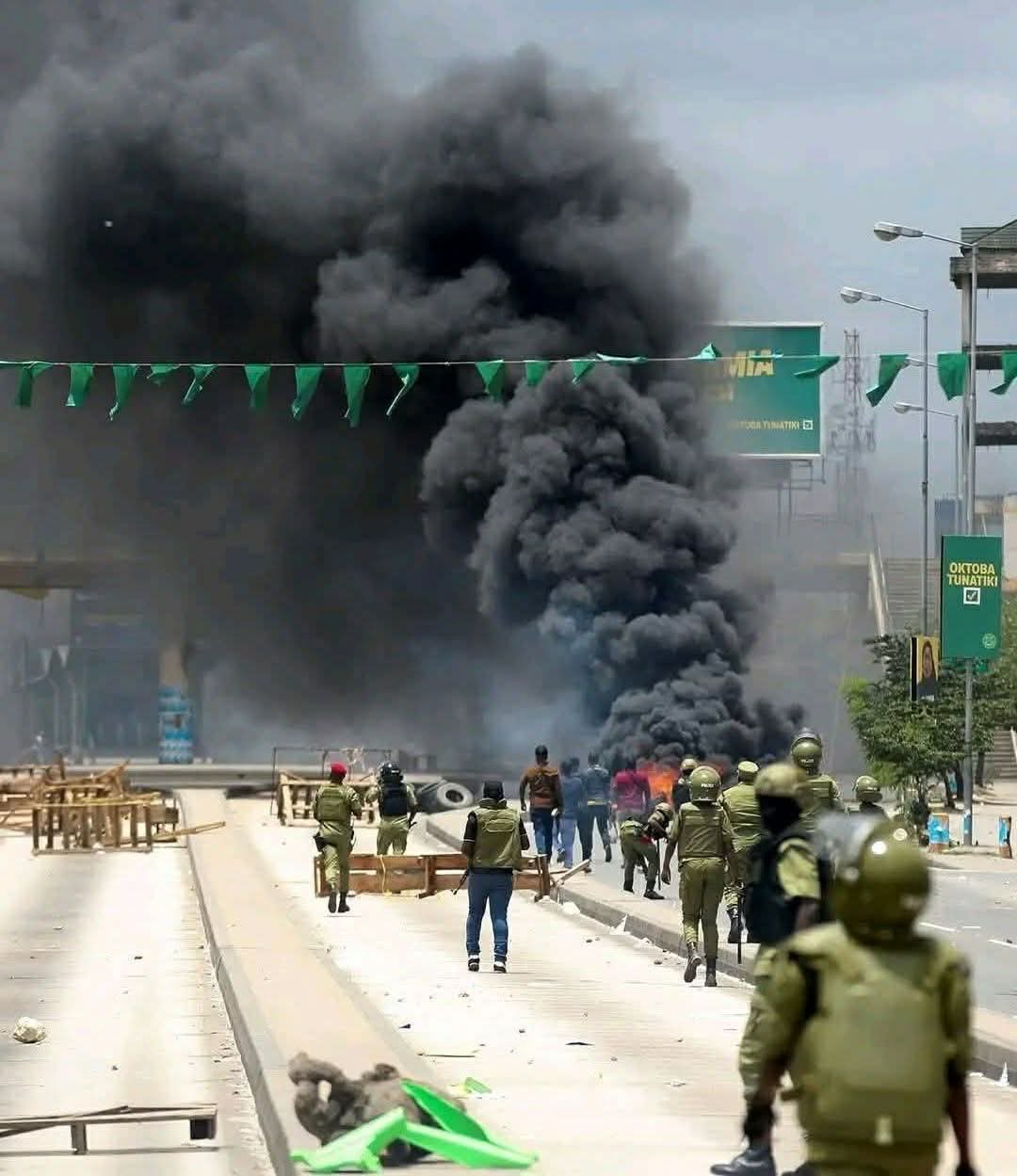
Tanzania’s recent unrest has reached a new level of chaos: civilians have broken into police uniform stores and are now appearing in full combat gear, making it impossible for officers to distinguish between armed civilians and legitimate security forces.
The breakdown began after the disputed general election, when protests over the exclusion of the two main opposition candidates and allegations of repression escalated into violent clashes.
Reports indicate that crowds stormed uniform depots, seizing military‑style clothing and equipment, further blurring the line between protesters and law‑enforcement personnel.The government has responded by downplaying the incidents as “isolated” events, while the army announced it has “controlled the situation.”
A curfew was imposed in Dar es Salaam, internet access was disrupted, and civil servants were ordered to work from home. Security forces have been patrolling the streets, and the authorities say they are engaging community leaders to restore order, but the sight of armed, uniformed civilians has heightened fears of a security breakdown.
The situation poses a major test for President Samia Suluhu Hassan, who has been praised for earlier reforms but now faces criticism for a series of arrests and alleged abductions of opponents.
International actors, including the U.S. embassy, have warned citizens to shelter in place, and European parliamentarians have denounced the election as “fraud” conducted in an atmosphere of repression and intimidation.
Casualty figures remain uncertain, with diplomatic sources citing dozens of possible deaths and human‑rights activists reporting at least five fatalities in the capital.
Beyond the immediate violence, the episode underscores the fragility of Tanzania’s political climate, where long‑standing tensions over electoral legitimacy, civil liberties and the role of security forces can quickly erupt into open confrontation.
Restoring calm will likely require not only tighter security measures but also credible dialogue, transparent investigation of the unrest, and steps to rebuild public trust in both the government and the police.