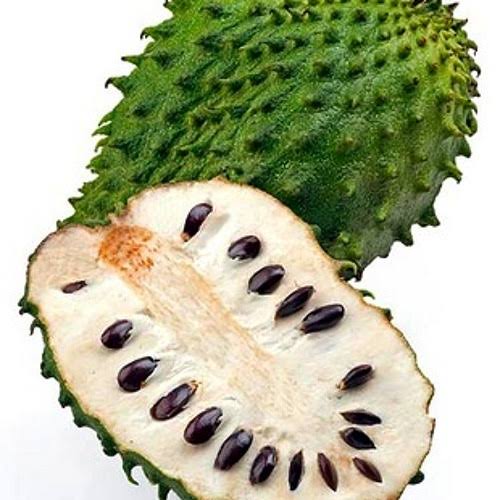
Guanabana, also known as Soursop, is a tropical fruit native to the Americas and the Caribbean, with its botanical name being Annona muricata. It is a large fruit, typically weighing between 2-7 kg. The fruit has a green, prickly exterior with a creamy white interior. Guanabana has been cultivated for centuries, with its exact year of discovery unknown, but it is believed to have originated in the tropical regions of Central and South America. It is widely prevalent in countries such as Mexico, Brazil, and the Caribbean islands, and thrives in well-drained, acidic soils with a pH range of 5.5-6.5.
Here are three health benefits of Guanabana:
- Cancer Prevention: Guanabana has been found to have anti-cancer properties, with studies showing that it can help to prevent the growth and spread of cancer cells. The fruit’s extracts have been shown to be effective against breast, prostate, and lung cancers.
- Neuroprotective Properties: Guanabana contains antioxidants and other compounds that have been shown to have neuroprotective effects, helping to protect the brain against damage and degeneration. This makes it a potential natural remedy for conditions such as Parkinson’s disease and Alzheimer’s disease.
- Anti-Inflammatory Effects: Guanabana has anti-inflammatory properties, which can help to reduce inflammation and alleviate symptoms associated with conditions such as arthritis, gout, and other inflammatory diseases. The fruit’s extracts have also been shown to have analgesic and antipyretic effects, making it a potential natural pain reliever.