









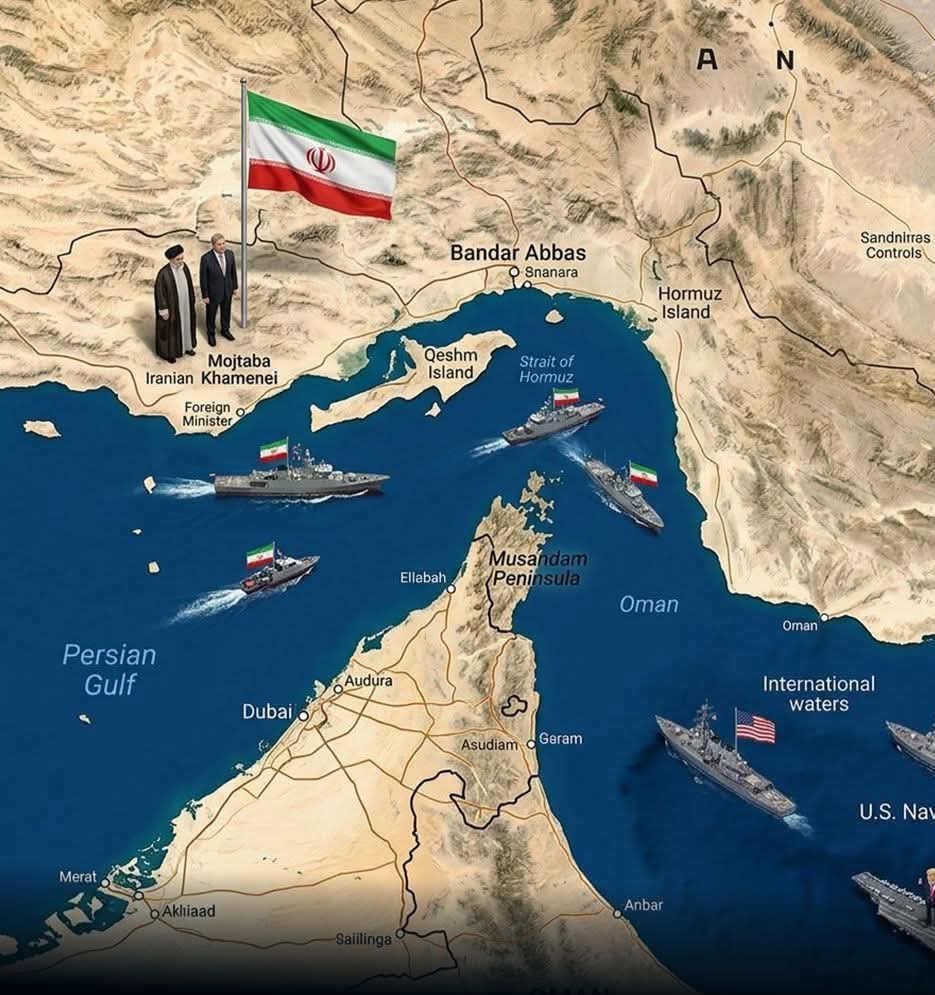
The escalation of tensions between the United States and Iran has raised concerns over potential disruptions to global oil supplies, with expectations of a significant increase in oil prices.
The Iranian authorities have declared that the Strait of Hormuz will be closed to maritime traffic unless a toll of two million dollars per vessel is paid, and have indicated the placement of mines to enforce this measure against non-compliant ships.
In response, the United States has affirmed that the Strait of Hormuz constitutes international waters, where no single nation may impose restrictions or levies on vessel passage.
To uphold freedom of navigation, the US has positioned naval forces at the entrance of the strait, issuing warnings that any vessel paying the Iranian toll or transporting Iranian oil will be subject to seizure.
This development is anticipated to severely limit Iran’s ability to export oil or generate revenue from tolls, thereby exerting considerable economic pressure on the country.
International legal principles generally classify major natural waterways as international waters, prohibiting any state from unilaterally claiming sovereignty or imposing tolls on commercial shipping.
In this context, Malaysia and Indonesia have cautioned that permitting Iran to establish such a toll regime in the Strait of Hormuz could set a precedent, potentially compelling them to introduce similar measures in the strategically vital Strait of Malacca, a critical chokepoint for global trade between the Indian and Pacific Oceans.
Concurrently, former President Trump has urged nations to purchase oil from the United States as an alternative source of supply.
