









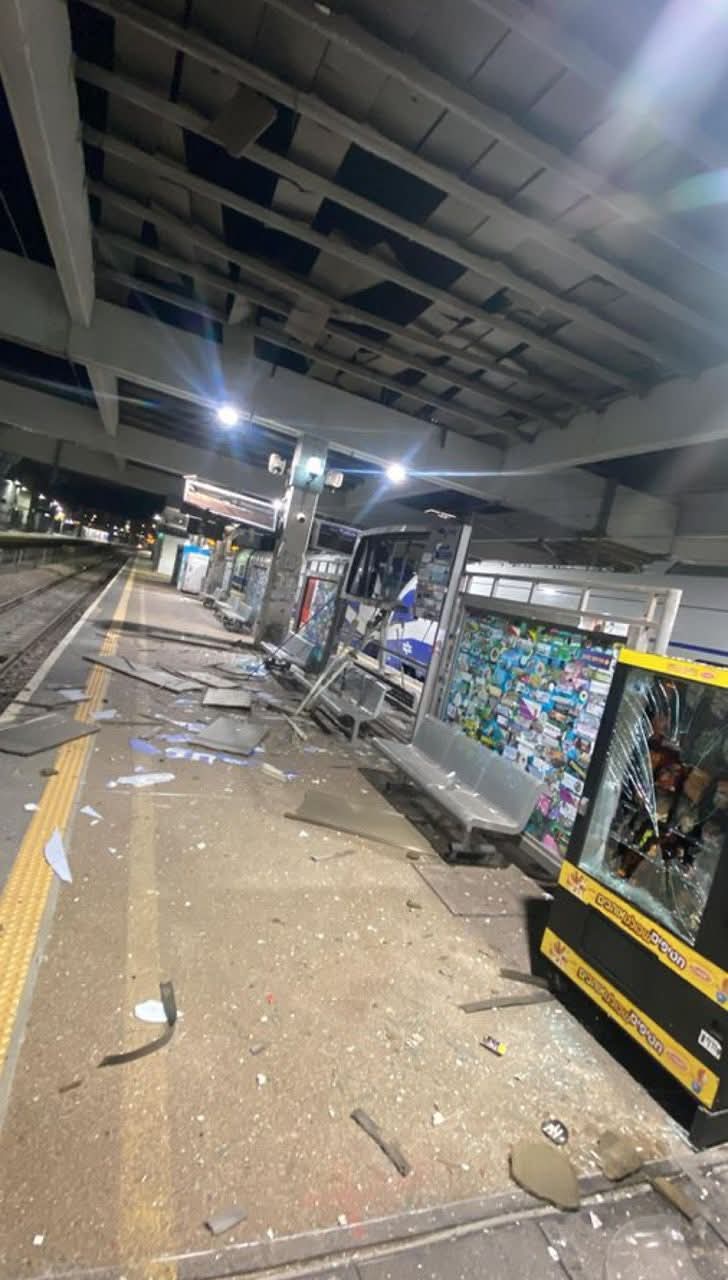
A recent ballistic missile attack launched by Iran has inflicted notable damage across multiple locations in and around Tel Aviv, Israel’s commercial hub.
Reports indicate that the assault, which occurred overnight, utilized warheads designed to disperse cluster munitions, resulting in widespread submunitions impacting various sites.
This tactic has led to scattered explosions, creating small craters, fires, and structural harm in residential neighborhoods, roadways, and key public facilities.
Emergency responders, including Magen David Adom, have documented impacts at several points in central Israel, with one prominent example being damage to the Savidor Center railway station in Tel Aviv.
The strikes disrupted transportation services and affected surrounding infrastructure, while additional reports mention harm to homes, vehicles, and other buildings in suburbs such as Ramat Gan, Holon, and nearby areas.
Civilian casualties have been confirmed in some incidents, including fatalities from shrapnel, amid ongoing assessments of the full extent of destruction.
The deployment of cluster munitions in this attack represents an escalation in the ongoing conflict, as these weapons disperse smaller bomblets over broad areas, complicating defense efforts and increasing risks to populated zones.
Israeli authorities continue to evaluate the aftermath, with air defenses intercepting many projectiles, though fragments and direct hits have still caused considerable disruption and material losses in the affected regions.
