









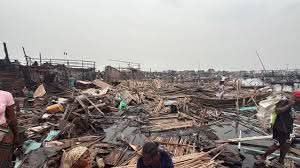
Mental health experts in Nigeria have expressed serious concerns that the ongoing demolition of structures in Lagos’ historic Makoko waterfront community could lead to profound psychological consequences for those affected.
Seasoned psychiatrists have highlighted that the sudden loss of homes, livelihoods, and community ties—without adequate relocation support—often results in intense trauma, potentially manifesting as severe emotional distress, clinical depression, anxiety disorders, and in extreme cases, suicidal ideation among displaced residents.
The demolitions, which have intensified in recent months as part of urban renewal efforts by authorities, have uprooted thousands from their long-established stilt homes over the Lagos Lagoon.
Residents report living in constant fear, grief, and uncertainty, with many forced into makeshift shelters, open spaces, or temporary arrangements lacking basic amenities.
This abrupt disruption, compounded by the destruction of social networks and sources of income like fishing, creates a high-risk environment for mental health deterioration, as sudden forced displacement is a well-documented trigger for such conditions.
Experts emphasize the need for urgent psychosocial interventions, including counseling services, community support programs, and comprehensive rehabilitation plans to mitigate these risks.
Without proactive measures to address the emotional toll, the long-term impact could extend beyond individual suffering to affect family structures and broader societal well-being in the affected areas.
The warnings underscore the importance of balancing development goals with humane considerations for vulnerable populations during such large-scale evictions.
Would you like more details on the ongoing situation in Makoko, government responses, or related mental health resources in Nigeria?
